Sunday, April 22, 2012

Happy Farms?

In recent years the movie "Food Inc." exposed where much of American meat came from. It showed the public where our chicken, beef, and pork came from and it was appalling. The sunny idea of "farm raised" animals was shattered by the cold, hard facts presented in "Food Inc.". The free range chicken and the farm raised beef that we buy in the supermarket often did not live the same life that the "free range" and "farm raised" animals we picture.

Our perception on where our meat comes from was just as distorted as our perception on where our fruits and vegetables come from. American growers are now "painfully aware that there are not enough U.S. born citizens and legal immigrants to do all the labor intensive work they require" (Wall Street Journal) and this is the reason for the 60 to 70 percent of illegal immigrants supporting our agriculture industry. A shocking percentage, given the public support for crack down on illegal immigrants.

Most people do not know where their produce comes from and in my opinion it is because of story book that later turn into interactive games such as "Farmville" and "Happy Farm". Both games paint a picture of a happy farm with happy animals and in both games there are no workers featured harvesting fields. I find the fact the people still want to believe America is made up of millions of little farmers with little farms that safely and humanely supply our meat and produce so interesting. It is not true yet people still want to believe that games like this and labels that say "farm raised" or "free range" are an indication of our farming industry.

Why do you think people feel more comfortable believing that our farming industry looks like "Farmville" or "Happy Farm"? 

Sunday, April 1, 2012

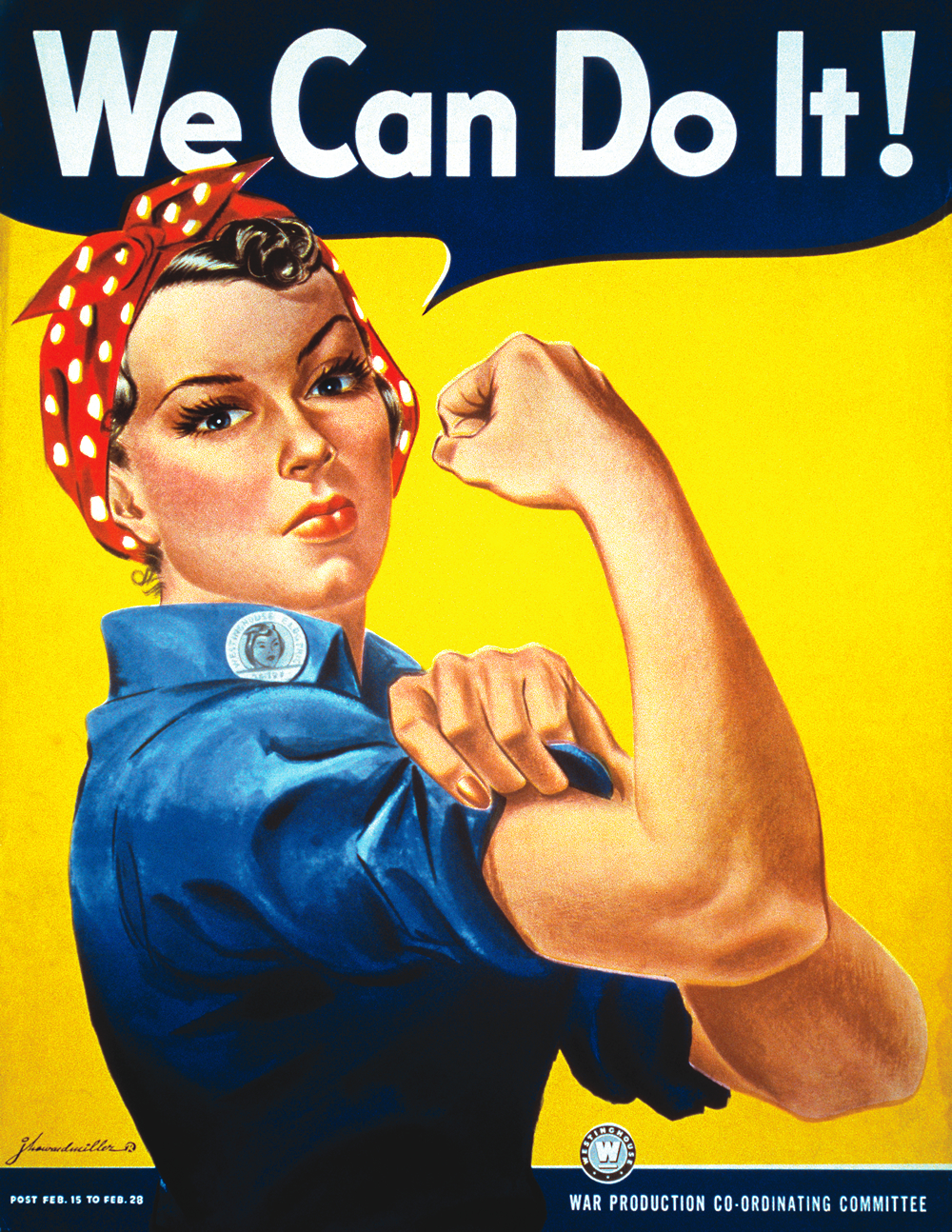
"We can do it!" vs. Bracero Program

The very popular propaganda poster
used during WWII to encourage women
to join the workforce.
I recently selected my topic for a Junior Theme, a research project addressing current social issues within American society. I chose to research on illegal immigration and how it affects the American agricultural industry. My research was based off of the book, "Inside the State: The Bracero Program, Immigration, and the I.N.S. (After the Law)" by Kitty Calavita. This book explored interesting theories on why the use of Mexican illegal immigrants in the food industry began. 
“The following year, with the attack on Pearl Harbor and the entry of the United States into World War II, the official attitude towards Mexican contract labor changed abruptly” (19)
One of these theories that Calavita provided was that Bracero Program, an agricultural guest worker program for Mexican citizens, was created to fill the labor gap that was left from WWII. I found this very interesting and it reminded me of the Geraldine Doyle "We can do it!" posters. It was interesting that both events helped fill the labor gap and that both events drastically changed the face of the American work force, however only one is heavily publicized and taught in schools.
Before beginning this research project I didn't have the slightest the idea about what the Bracero Program was and I barely knew anything about the ongoing illegal immigration debate in our country. I knew plenty about the women that filled the labor gap during WWII. The information that the textbook and our society likes to include says a lot about our ideas about different topics. For example, by barely acknowledging the role Mexican immigration has had on our food industry we are trying to hide that ugly picture and still credit American farmers for work that is mainly done by Mexican immigrants. It is rather ironic that many Americans feel so opposed to illegal immigrants and Mexican immigration as a whole when most do not know of the impact that they have on our food industry and our everyday lives. 
Why do you think that the topic of Mexican immigration and the Bracero Program is so rarely taught or talked about in schools?

Tuesday, March 13, 2012

Today's Society Pill Poppin'

Medicine is the quick fix to the slightest hint of pain. Medicine is a manufactured, artificial pill designed in a lab to sooth our symptoms. More interestingly "shaman", the native American term for "medicine man", derived from the word "medicine" implying "magical influence" (Online Etymology Dictionary). I found this incredibly intriguing because of the way medicine is used in millions of households today.

So many people rely on medicine as a quick fix and don't realize all the complications and the harm that it can cause. Medicine is just seen as something that suppresses the pain. In the book that we are reading in American Studies, "White Noise" by Don DeLillo, there is a quote that really relates to this.

"They isolated the fear-of-death part of the brain. Dylar speeds relief to that sector." (190)


In the book there is this drug called Dylar that is supposed to suppress the fear of death from a person. DeLillo is satirizing our society's dependency on medicine and how medicine cannot fix everything, especially not the age-old fear of death. This also relates to a blog that I recently read by a classmate of mine, Layne E, who commented on the over medication that is going on in today's world. The over medication of today's world is causing people to be much more dependent on medication and leads other more serious medical problems.

What do you think about the uses of medication in today's society? Do you think that advances in medicine are truly aiding our society or causing more problems for it?

Monday, March 5, 2012

Women getting their fair share?

SOURCE
After reading Mr. O'Connor's blog on our class's blog it got me thinking about how often I see women being the main focus of TV shows. Although we are talking about TV tokenism and how it relates to racist stereotypes, I wanted to take a second to talk about the TV tokenism and how it relates to women. Too often are women shown as sidekicks or assistants to more dominant male characters. While watching some TV tonight I saw an add for a show called "Unforgettable" starring Poppy Montgomery, a red headed woman who plays Carrie Wells a strong and valuable leader of a police force.

Even though a red headed lead character isn't an example of TV tokenism the fact that Wells is the main focus of the show is a phenomenal leap for women in the entertainment business. In the show she has a flawless memory which makes her fantastic at her job and gives her almost super human qualities. This show is empowering women in a way that they aren't typically portrayed and that is showing some significant leaps for women.

Unfortunately, this is an exception in the current pattern of women portraying the roles of sidekicks or minor characters. In today's shows many women are only filler characters in love triangles or romantic plots and they do not have an equal recognition or depth that the male characters have. Although women have gone from being housewives to policewomen, there is still much more ground to be covered.

What do you think or the progression of women in the entertainment business? Do you feel that women already have an equal opportunity in the business?